
All year · Pest ID · November 2026
Wasp vs. hornet vs. mud dauber: how to tell them apart
Look at the body and the nest. Here’s how to tell paper wasps, yellowjackets (what most of Austin calls hornets), mud daubers, cicada killers and honey bees apart, which ones sting, and what to do about each.
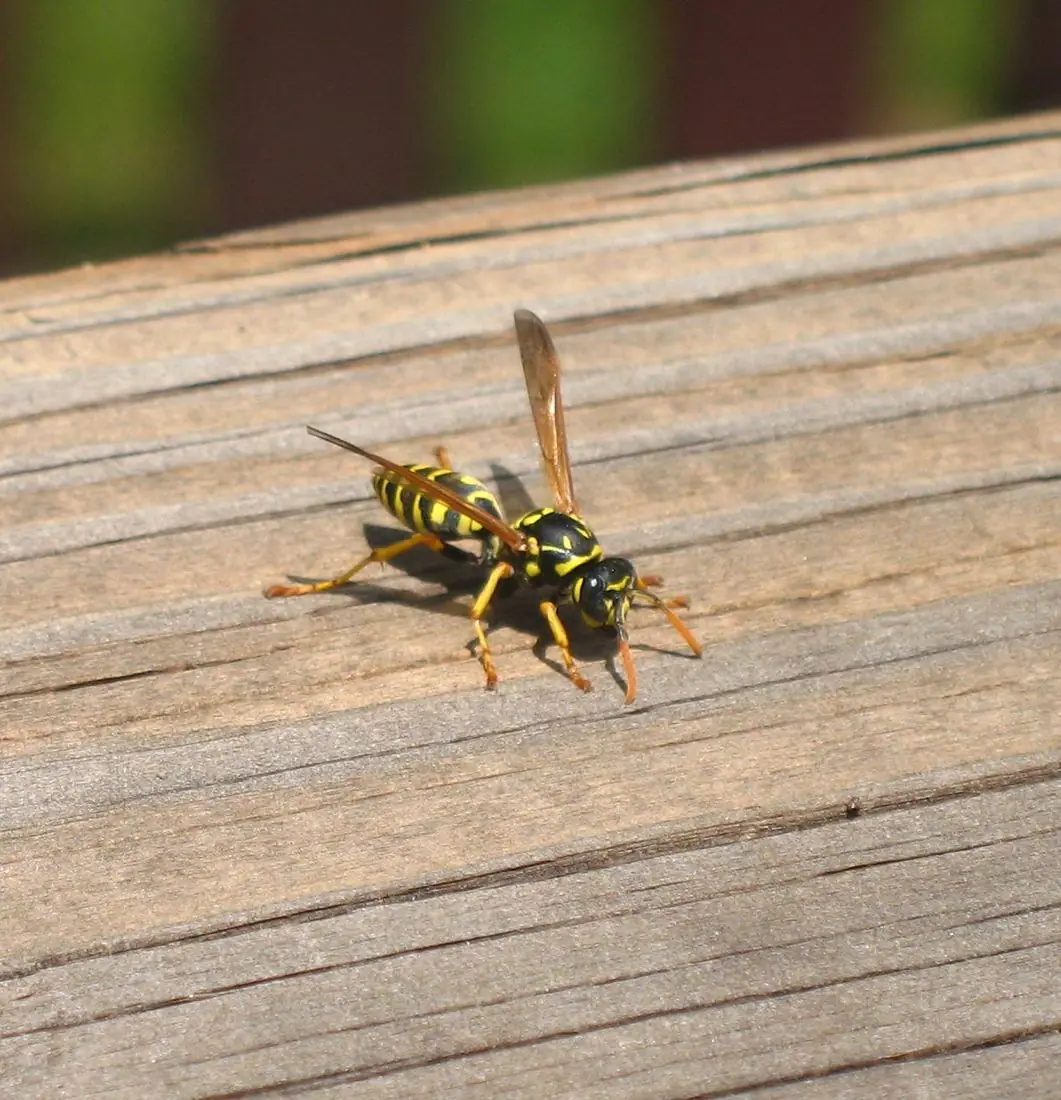
The short answer: paper wasps are long and thin and hang an open paper comb under the eaves. Yellowjackets, which most people here call hornets, are short, bright yellow and black, and hide their nest in the ground or a wall. Mud daubers are thread-waisted wasps that build tubes of mud and almost never sting. Cicada killers are huge wasps digging holes in the lawn in July. Honey bees are fuzzy and golden-brown and build wax comb.
Side by side
| Insect | Look and size | Nest | Sting |
|---|---|---|---|
| Paper wasps and red wasps | Long, thin body with the legs hanging down in flight. Reddish-brown, or yellow and black. About 3/4 to 1 inch. | Open, umbrella-shaped paper comb under eaves, porch ceilings, play sets, shutters and grill covers | Painful, and they can sting more than once. They defend the nest if you get close. |
| Yellowjackets (what most of Austin calls hornets) | Short, stocky, bright yellow and black, about 1/2 inch. Fast fliers. | Hidden in the ground, under shrubs or in a wall. You see a steady stream flying in and out of one hole. | The most aggressive of the group. Painful, can sting more than once, and you often get several stings at a time. |
| Mud daubers (dirt daubers) | Very thin thread waist, about 3/4 to 1 inch. Black and yellow, all black, or shiny metallic blue. | Tubes and lumps of mud on siding, garage ceilings, porches and in attics | Rare and usually mild. They live alone and don’t defend the nest. |
| Cicada killers | Huge, up to 1.5 inches. Rusty-orange head and wings, black body with pale yellow bands. | A finger-wide hole in bare soil with a fan of loose dirt in front | Rare. Males have no stinger. Females sting only if grabbed or stepped on. |
| Honey bees | Fuzzy, golden-brown with darker bands, about 1/2 inch | Wax comb in a wall, tree or meter box, or a swarm hanging on a branch | A worker stings once and the barbed stinger stays in your skin. Scrape it out. |
Wasp vs. hornet: what Austin calls a hornet
Hornets are a kind of wasp, but true hornets are uncommon around Austin. When someone here says “hornet,” they almost always mean a yellowjacket: the short, bright yellow wasp nesting in the ground or inside a wall. The big difference from a paper wasp is the nest. A paper wasp nest is open and easy to see. A yellowjacket nest is hidden, and you find it when you mow over it or a stream of wasps pours out of a gap in the siding.
That hidden nest is why yellowjackets cause the worst stings. Don’t plug the hole. Yellowjackets in a wall will chew a new way out, sometimes into the house.
Mud dauber vs. wasp
A mud dauber is a wasp, just a very different one. It lives alone, builds with mud instead of paper, and doesn’t defend its nest, so stings are rare. The black-and-yellow mud dauber builds lumpy mud cells. The organ-pipe mud dauber, all black, builds long tubes side by side like organ pipes. The metallic blue mud dauber moves into old nests. All of them hunt spiders and pack them into the mud cells to feed their young.
“Dirt dauber” is just another name for a mud dauber. If the wasp you’re seeing is reddish with a paper nest, it’s a red wasp, which is a kind of paper wasp, not a mud dauber.
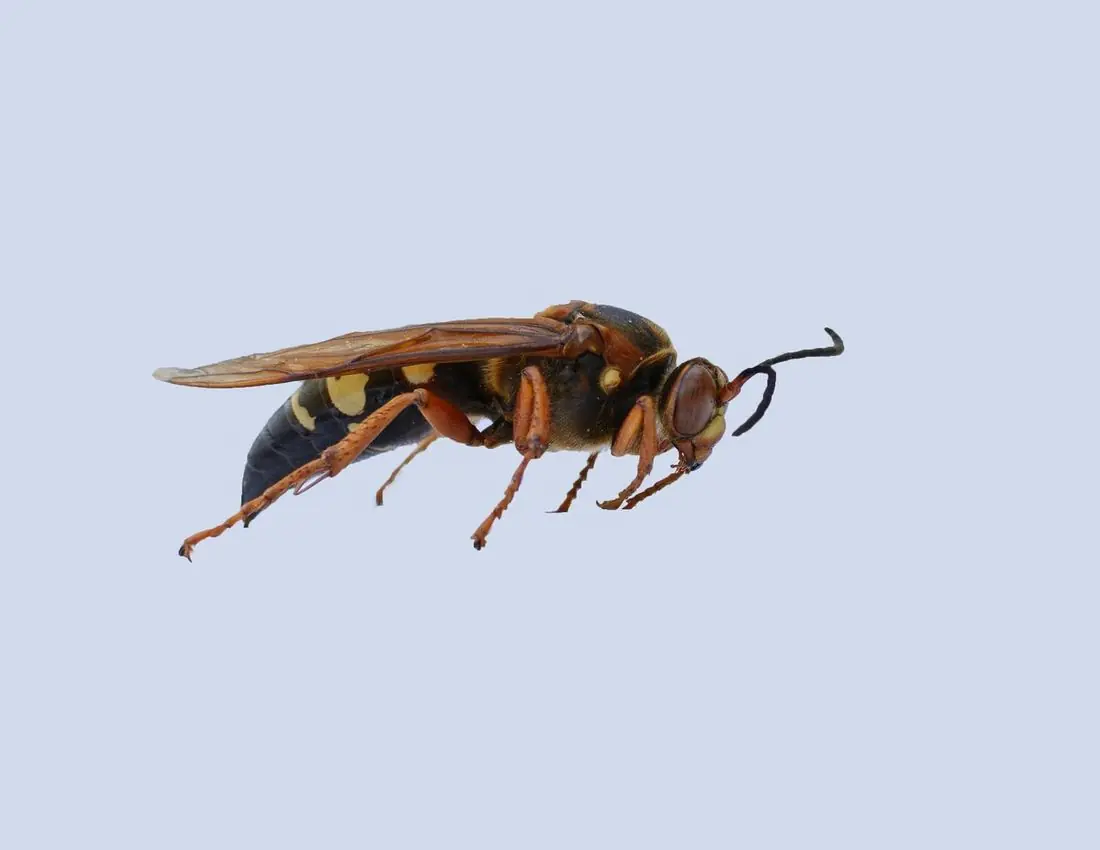
Cicada killers: the giant wasp in the lawn
Cicada killers look scary because of their size, but they’re the least likely to sting of any wasp on this list. The ones diving at your head are males, and males have no stinger. Each female digs her own hole, stings a cicada, drags it underground and lays an egg on it. They show up in late June and July when the cicadas start singing, and they’re gone on their own by early September. See cicada killer wasps.
Honey bees: leave them to a beekeeper
Honey bees are fuzzy, slower and calmer than wasps, and they build wax comb, not paper. A spring swarm hanging on a branch is usually calm and often moves on by itself in a day or two. Please don’t spray it. We don’t treat honey bees. If a colony has moved into a wall or meter box, call us and we’ll refer you to a beekeeper who relocates them.
When each one shows up in Austin
- March and April: a single wasp queen starts a nest about the size of a quarter. Spring is the easiest time to deal with them.
- Summer: colonies grow. Cicada killers dig in the lawn in late June and July.
- August through October: nests are at their biggest and yellowjackets get pushy around trash cans and open drinks.
- After the first hard freeze: the workers die off. Mated queens hide for the winter and start over in spring.
What we do about each one
- Paper wasps and red wasps: we spray and knock down every nest we can reach, second stories included.
- Yellowjackets: we treat the nest at the entrance.
- Mud daubers: we spray and scrape the nests. If they keep turning up inside, we can dust the attic.
- Cicada killers: optional. We treat active holes near play areas, pools and walkways.
- Honey bees: we refer you to a beekeeper.
A wasp nest is quoted as its own visit, or knocked down at no extra charge during a visit you’re already getting, like your quarterly service. Wasps aren’t warrantied, because nothing stops a new queen from building next week, but if we miss a nest, tell us within a week and we’ll come back and knock it down free. More on our wasp and hornet service.