

Fire ants · Austin, Texas
Fire ant control in Austin
Fire Ant Control in Austin at a glance
| Fire ant in Austin yards | Red imported fire ant (Solenopsis invicta), reddish-brown to copper, in mixed sizes |
|---|---|
| When they're active | Active Feb–Dec; peak Apr–Jun and Oct–Nov |
| Where they build | Sunny lawns, flower beds, sidewalk cracks, and around AC pads and electrical boxes |
| What we do | A non-repellent product on active mounds, a granule across the whole yard, and a repellent treatment inside where they’re coming in |
| When to treat | Spring (Mar–May) and fall (Sep–Nov) |
| Price | Call or text for a price. It depends on yard size. Quoted separately from the quarterly plan, plus tax. |
| Contract | None |
| ZIP codes | 78702, 78704, 78723, 78727, 78746, 78748, 78758, 78759 and more |
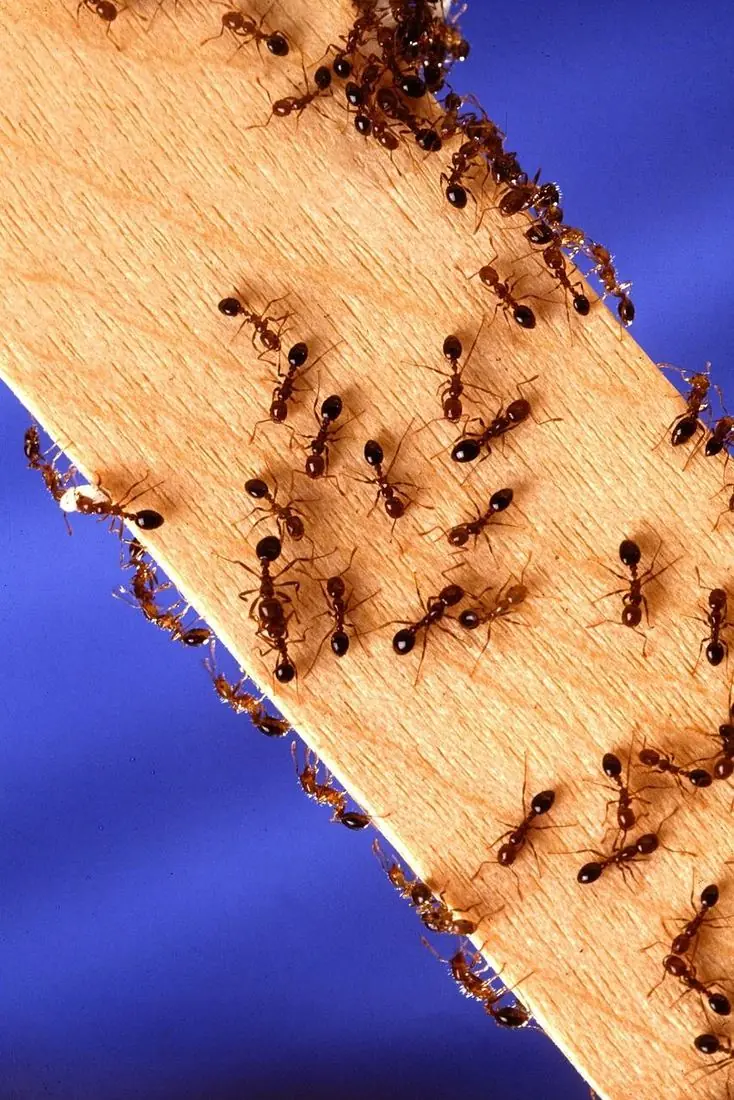
Fire ants turn up in every sunny Austin yard, from Mueller to Circle C. New mounds pop up a day or two after rain, and colonies often move into AC units and electrical boxes.
Signs to look for
- New mounds a day or two after rain
- A swarm of stinging ants when a mound is disturbed
- Itchy white pustules a day after stings
- Ants clustered in AC units or electrical boxes
What you can do between visits
- Don't dig into or flood mounds, which just moves the colony
- Keep mulch pulled back from the foundation
- Treat the whole yard in spring and fall rather than mound by mound
- Text us a photo when new mounds show up
How we treat fire ants in Austin yards, step by step
- You text or call. Send a photo of the mounds to 512-203-0525. Is the yard under 1/4 of an acre? Are the ants coming inside too? The office quotes it and books you on a day a technician is already working near you.
- Reminders. You get email reminders 5 days before and the day before. If a gate is locked or a dog lives in the backyard, let the office know.
- On the way. The technician usually texts when they’re on the way. You don’t have to be home for the yard work.
- The walk. The tech walks the whole property first: front yard, backyard, side yards, flower beds, fence lines, and around the AC pad, electrical boxes and sidewalk edges, where colonies like to sit.
- The mounds. Active mounds get a non-repellent product. The ants can’t tell it’s there, so they walk through it and carry it back down into the colony to the queen. Killing the workers on top does nothing if the queen is fine two feet down.
- The yard. Then the tech spreads a granule across the lawn and beds. It reaches colonies that haven’t pushed up a mound yet. On a typical city lot this is all one stop.
- Inside, if needed. If they’re coming in through a slab crack or along plumbing, the tech treats those spots with a repellent product. If nobody’s home, the tech does the outside and the office reaches out to set up the inside.
- After the visit. Water the granule in, keep kids and pets off the treated areas until they dry, and wait 48 hours to mow.
- The next few weeks. Most mounds slow down over the first one to two weeks. If one is still active after three weeks, text a photo. We don’t re-treat sooner than that.
Mound treatment, yard granule or bait: how they compare
A lawn ant treatment for fire ants is a different job from what we do for ants in the kitchen. People usually ask us about three ways to go after fire ants. Our standard visit uses the first two together.
| Mound treatment | Broadcast yard granule | Fire ant bait | |
|---|---|---|---|
| What it is | Non-repellent product on and around each active mound | Granules spread across the lawn and beds, then watered in | Bait the workers carry home as food |
| What it reaches | The colonies you can see | Colonies with and without a mound | Colonies whose workers find it |
| How fast | Mounds slow down over one to two weeks | Works over the following weeks as it soaks in | Slow, often several weeks |
| Weak spot | Misses colonies with no mound | Has to be watered in | Breaks down when wet; only works while ants forage |
| Where it fits | A few mounds, or spot-treats during a regular visit | Whole yards where mounds keep coming back | Mostly a store-bought product. Not part of our standard fire ant visit. |
Why kicking or flooding a mound just moves it
Boiling water, a shovel, the garden hose, mound powder from the hardware store. The mound goes flat, and a few days later it’s back a few feet away. The colony runs deep, and the queen is down in the tunnels, not in the dome of dirt you can see. Break up the top and the colony just relocates. Contact powders work the same way: they kill the ants they touch and the rest of the colony moves.
That’s why fire ant control in Austin works better yard by yard than mound by mound.
Rain, new sod and the time of year
Mounds after rain
The ants were already there. Wet ground pushes the colony up, and they build the mound higher to stay dry. A yard that looked clean on Friday can have a dozen mounds by Monday after a spring storm.
New sod
New subdivisions in Leander, Hutto, Pflugerville and Kyle get a lot of fire ants the first year. Sod often comes in with colonies already in it. Weed treatments wait until new sod has rooted (at least 30 days, and until the sod lines are gone). Fire ants are a separate treatment, so mention the new sod when you book.
Fire ants across Austin: clay, caliche and creek bottoms
East of I-35 the ground is blackland clay. It cracks open in July and August, and after the first good rain the mounds go up big and fast in yards in East Austin, Manor, Hutto and Pflugerville. West of MoPac the soil is thin over limestone and caliche, and we find a lot of colonies in flower beds, along rock borders and under landscape rock. Lots on the Hill Country greenbelts keep getting new colonies from the open ground behind the fence.
Creeks matter too. When Onion Creek, Brushy Creek, Shoal Creek or Walnut Creek floods, fire ants can float out as a clump and come ashore wherever the water drops them.
Most Austin lawns are St. Augustine, Bermuda or Zoysia, and the granule goes down on all three.
Fire ant timing in Austin, season by season
| Season | What the ants are doing | What we suggest |
|---|---|---|
| Late Feb–March | Colonies wake up with the first warm stretches | A good time for a whole-yard treatment, ahead of spring rain |
| April–June | Peak. Spring storms push up new mounds | Treat the yard, then spot-treat new mounds |
| July–August | Colonies go deep to get out of the heat. Fewer mounds. Winged swarmers start in August | We still treat. Fire ant work isn’t on the summer pause that weed control is |
| Sept–November | Second peak, often right after the first cold front in mid-October | The other good window for a whole-yard treatment |
| Dec–January | Slow, not gone | Spot-treat what’s active |
Is fire ant control on the quarterly plan?
No. Fire ants are quoted separately from quarterly pest control. The regular visit treats the house, garage and foundation, not the whole lawn. If you’re already on the plan, two things help:
- Free mound spot-treats. Point out mounds to the technician on any service visit and they get treated at no charge.
- The yard granule add-on. Quarterly customers who get the granule every visit are covered for fire ants between visits. If mounds come back, call and we come back out. That’s in our warranty.
Fire ants aren’t on the list of pests covered between regular quarterly visits. A one-time fire ant treatment with no plan is quoted after we know the size of the yard. Text a photo and the office usually gets back to you the same business day.
What sets the price
Fire ant control is call or text for a price, and it depends on yard size. A quarter-acre lot in Circle C and two acres in Liberty Hill are different jobs. Other things that move it:
- How much of the property gets the granule: front only, front and back, or acreage
- How many active mounds there are, and whether they’re in beds, rock borders or along fence lines
- Whether the ants are coming inside, which adds an inside treatment
Plus tax. No start-up fee and no contract. Our published prices for other services are on the pest control cost in Austin page.
What you do after the treatment
Water it in. The granule has to be watered in to work. If it doesn’t rain within 48 hours, run one normal irrigation cycle. You don’t need to soak the yard.
Wait to mow. Hold off on mowing for 48 hours so the granule stays where it was spread.
Kids and dogs. Keep kids and dogs off the treated areas until everything dries, usually an hour or two. That’s what the label calls for. If the dog lives in the backyard, bring it in before the tech gets there and leave it in until things are dry.
Not sure they’re fire ants? Our fire ant identification guide shows what the ants, the mounds and the stings look like. For ants in the kitchen, see ant control.
Who’s doing the work
Our fire ant control services run on the same route days as our pest and lawn work. We’ve treated Austin yards since 2010. We’re locally owned, based in South Austin with no walk-in office, licensed by the Texas Department of Agriculture (TPCL #606255) and fully insured. We have 4.9 stars on Google (nearly 1,000 reviews) and on Yelp (800+), and we’re Austin’s highest-rated pest control company on Yelp. Nextdoor neighbors voted us a Neighborhood Fave in 2021, 2022, 2023 and 2025, and Yelp gave us its People Love Us award in 2023, 2024 and 2025. Read what customers say.
Neighborhoods
Austin neighborhoods we treat every week
People find us searching “fire ant control near me” from all over the area. Route days are grouped by area, so there’s usually a technician near you. See every town we serve.
How much fire ant control costs in Austin
- $200 plus tax to treat inside and outside, or $150 for outside only or inside only.
- The yard treatment is a granule that needs to be watered in within 48 hours.
- Quarterly customers: we spot-treat fire ant mounds at every visit at no charge, and if your plan includes the yard granule each visit, fire ants are covered between visits.
Very large properties are quoted by size.