

Lawn pests · Austin, Texas
Lawn pest control in Austin, TX
Lawn pest control at a glance
| Pests we treat | Grub worms, chinch bugs, fall armyworms, sod webworms, mole crickets and fire ants |
|---|---|
| Lawns | St. Augustine, Bermuda, zoysia and mixed Central Texas turf |
| When damage shows up | Late spring through fall, worst in the July–September heat |
| How we treat | Inspect and identify the pest, then a targeted granular or liquid turf treatment timed to that pest |
| Price | Quoted per yard before any work. Plus tax. |
| Contract | None |
| Service area | Austin and 26 nearby towns |
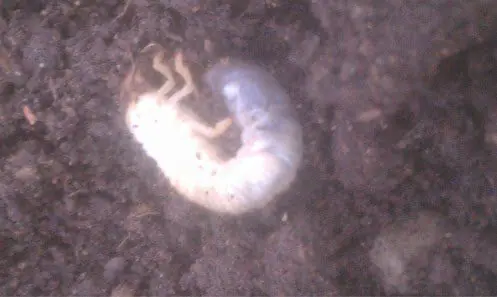
Most dead patches in Austin lawns in summer are blamed on drought. Some of them are insects. Grubs, chinch bugs and armyworms leave damage that looks a lot like dry grass, and watering more won’t fix it.
Austin lawn pests by month
Lawn insects in Austin follow the weather more than the calendar. A hot, dry July is chinch bug season in St. Augustine, and late-summer rain sets off armyworms. Here’s roughly what we see.
| Months | What’s active | What you’ll notice |
|---|---|---|
| January–February | Grubs sit deep in the soil. Fire ants stay low. | Not much. A warm, wet week brings mounds back up. |
| March–April | Fire ants rebuild after the spring rains. Grubs that wintered over move back up to feed for a few weeks. | New mounds after every rain. |
| May–June | June beetles fly at night and lay eggs in the lawn. Mole crickets work close to the surface. Chinch bugs start in late June. | Beetles at the porch light, raised tunnels, the first yellow spot next to the driveway. |
| July–August | Chinch bugs peak in sunny St. Augustine. Sod webworms feed at night. New grubs hatch and feed just under the surface. | Straw-colored patches that spread even after you water, small moths flying up at dusk. |
| September–October | Fall armyworms move in after late-summer rain. Grub damage shows up. Armadillos and skunks dig for the grubs. | Grass chewed down in days, turf that rolls back like a rug, holes dug overnight. |
| November–December | The first fall cold front (usually around mid-October) slows everything down. Grubs move deeper for the winter. | Damage stops spreading. Fire ants still build on warm days. |
Which lawn pest is it? Bugs, drought or disease
The most common call we get about a brown lawn starts with “I’ve been watering and it’s getting worse.” Insects, drought and fungus all look like the same dead patch from the street. Get down at the edge, where the brown meets the green, and check for these.
| What you see | Likely cause | What we do |
|---|---|---|
| A yellow spot in full sun next to the driveway or sidewalk, in St. Augustine. The edge keeps moving even after you water. | Chinch bugs | Part the grass at the edge to find them, then treat the patch and a band of healthy grass around it. |
| Brown turf that rolls back like a rug, roots missing. Armadillos or skunks digging at night. | Grub worms | A granule watered into the soil where the grubs feed. A heavy case can take a couple of applications. |
| Grass chewed to the runners in a few days, the damage moving across the yard in a line. | Fall armyworms | A spray on the grass blades, where the caterpillars eat. No watering in. |
| Small ragged brown spots, chewed blade tips, little tan moths that fly up when you walk the yard at dusk. | Sod webworms | A spray on the blades across the damaged area and the grass around it. |
| Spongy ground, raised tunnels, grass dying in streaks with no grubs underneath. | Mole crickets | Treat the tunneled area once we’ve confirmed it’s mole crickets. |
| A whole section turns dull blue-gray, the blades fold, your footprints stay pressed in. It perks up after a deep watering. | Drought or heat stress | No insect treatment. We go over your watering schedule with you. |
| Round tan rings in spring or fall. The blades pull out of the runner easily and are rotted at the base. | Brown patch (a fungus) | A fungicide, not an insect treatment. See lawn disease treatment. |
A fungicide won’t touch grubs, and a grub granule won’t stop brown patch. That’s why we identify first. Not sure? Text a photo to 512-203-0525. More pictures of each insect are in our lawn and plant insect guide.
What you can do
- Water deeply once or twice a week instead of a little every day
- Keep St. Augustine mowed at 3 to 4 inches
- Don’t over-fertilize in summer; soft new growth draws chinch bugs
- Text us a photo as soon as a patch starts spreading
What a lawn insect visit looks like
With us, hiring a lawn pest control company starts with a text, not a truck. Here’s how it goes, start to finish.
- Photos first. Text 512-203-0525 a wide shot of the yard and a close-up of the edge of the damage. We’ll ask whether the yard is under a quarter acre and whether it’s the front, the back or both.
- Quote and booking. You get a price before any work. We put you on the next route day for your part of town.
- Reminder and on-the-way text. You get an email the day before, and a text when the tech is heading to you. Nobody has to be home. Just leave the gate unlocked and keep dogs inside.
- Inspection. The tech goes straight to the edges of the damage, where the live insects are. That means folding back sod for grubs, parting St. Augustine at the soil line for chinch bugs, or a soapy-water flush to bring caterpillars up. If there’s no insect, we say so and don’t treat for one.
- Treatment. A granule or a spray, depending on the pest, over the damaged area and the healthy grass around it, since most lawn insects are moving outward.
- After we leave. Water in a granule within 48 hours if it doesn’t rain. Keep people and pets off the lawn until it dries, and don’t mow for 48 hours (more below).
- The next few weeks. The damage should stop spreading. Dead grass doesn’t turn green again, but if the runners at the edge are alive, St. Augustine and Bermuda fill back in over the growing season. If the patch keeps growing after about 2 to 3 weeks, call and we’ll come back and look.
Granule or spray, and what you do after
Granules: grubs, chinch bugs, fire ants
Spread over the lawn and watered in, by rain or one irrigation cycle, so it soaks down to where grubs and chinch bugs feed. Keep kids and pets off until it’s watered in and dry.
Sprays: armyworms, sod webworms
A liquid on the grass blades, where the caterpillars feed. It doesn’t need watering in. People and pets can go back out once it dries, usually 30 to 45 minutes depending on the heat. Hold off on mowing for 48 hours.
Lawn insects don’t take the summer off
Weed control pauses in the hottest months, typically July and August, because weed products stress grass that’s already heat-stressed. Insect treatments don’t pause. Chinch bugs, sod webworms and young grubs are at their worst in that heat, and the systemic lawn insect treatments we use for grubs and chinch bugs work through the soil and the grass, so they keep going all summer. We treat as soon as we find them.
Lawn pest control in Austin depends on where you live
Where you are in town changes what we look for. West of MoPac and out toward Lakeway, Bee Cave and Dripping Springs, lawns sit on a few inches of soil over limestone and caliche. That thin soil dries out fast, so heat stress and chinch bugs look alike there. East of I-35, in Pflugerville, Hutto and Manor, the blackland clay holds water and cracks open in August. Grubs do well in that heavy soil, and so does fungus where sprinklers run at night.
In the new subdivisions in Leander, Kyle, Buda and Round Rock, most lawns are a few years old and went in as fresh sod. Armadillos tearing up the edges of a new lawn usually means grubs, and we treat the grubs instead of trapping the armadillo. Near the greenbelts along Barton Creek, Brushy Creek and Onion Creek, skunks and armadillos come in from the brush at night to dig for them. We also find grubs under the mulch around trees where gutter water pools, which is easy to miss if you only look at the open lawn.
What’s covered and what’s quoted
Our lawn pest control services are quoted after we see photos or the yard, and the price is explained before any work. Regular lawn visits start at $90, plus tax. Lawn insects aren’t covered by the quarterly pest plan warranty. Fire ant mounds are the exception: the tech spot-treats them free during any service, and quarterly customers who get the yard granule every visit are covered for fire ants between visits. If damage keeps spreading after a lawn insect treatment, call and we’ll come back and look.
What sets the price
- The size of the yard. Most Austin lots are a quarter acre or less, and bigger yards cost more.
- Which pest it is. Grubs, chinch bugs and caterpillars each take a different product.
- How much of the yard is hit: one patch, the front, or front and back.
- How bad it is. A heavy grub case can need a second application.
What we don’t do
- Treat for an insect that isn’t there. If it’s drought or disease, we tell you.
- Mow, aerate, reseed or lay sod. We’re chemical lawn care only.
- Trap armadillos. We treat the grubs they’re digging for.
For how we price everything else, see pest control cost in Austin.
One company for the whole yard
How lawn pest control fits with your other services
We’re a lawn and pest control company, so one company handles the grass, the house and the shrubs. Lawn insects are quoted on their own.
| Service | What it handles | Lawn insects? |
|---|---|---|
| Lawn program | Weed control and fertilizer, about 3 visits a year, from $90 a visit | No, but the tech tells you if something’s chewing on the grass |
| Quarterly pest control | Inside, outside and garage, from $90 a visit. The first visit adds a yard granule | Fire ants, when you get the yard granule every visit |
| Lawn pest control | Grubs, chinch bugs, armyworms, sod webworms and mole crickets in the turf | Yes. Quoted after we see photos or the yard |
| Root drench | Aphids, scale, mealybugs and whiteflies on shrubs and small trees | No, it’s for plants, not turf |
For bugs in the yard that bite people and pets instead of the grass, see yard pest control for fleas, ticks and chiggers.
We’ve been doing this in Austin since 2010. We’re locally owned, licensed by the Texas Department of Agriculture (TPCL #606255) and fully insured. Customers give us 4.9 stars on Google (nearly 1,000 reviews) and on Yelp (800+), where we’re Austin’s highest-rated pest control company on Yelp. We’re a 4-time Nextdoor Neighborhood Fave and won Yelp’s People Love Us award in 2023, 2024 and 2025. Read the reviews.